Walk into most facilities using lasers—whether it’s a bio-processing lab, manufacturing floor, or R&D space—and you’ll often see the same thing: a warning label, maybe a pair of safety glasses nearby, and a general assumption that everything is under control. This is why the hidden risks of lasers and why labels only are not enough.
The assumption that a label or warning sign is enough, but this is where the problem starts and worker safety is not fully understood.
Misunderstood Hazard
Lasers are one of the most commonly misunderstood hazards in industrial and laboratory environments. Unlike ionizing radiation, which tends to trigger immediate caution, lasers often feel familiar and manageable. People have seen them before in many places. They don’t always look dangerous. And in many cases, they’re enclosed or integrated into equipment, which creates a false sense of security.
However, the reality is laser hazards are highly dependent on how the system is used, how it’s configured, and how people interact with it. A label on the side of a machine doesn’t account for reflections, maintenance conditions, alignment tasks, or real-world human behavior. These situations are where a proper laser hazard evaluation becomes critical for compliance and worker safety.
What Makes Laser Hazards Different
Laser hazards don’t behave like most workplace hazards. Similar to ionizing radiation, you’re not dealing with something you can always see, smell, or hear. The risk depends on beam characteristics, exposure duration, and geometry—all of which can change depending on the task.
Four Categories of Laser Hazards
Eye Hazards
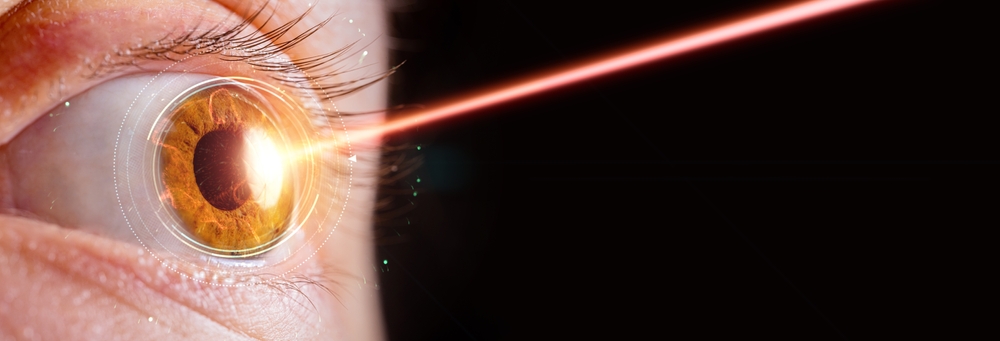
This is the primary concern in most laser applications. The eye is uniquely vulnerable because it acts like a lens system—it can focus incoming laser energy down onto a very small spot on the retina. What might be a relatively low-power beam in open air can become highly concentrated once it enters the eye, increasing the risk of injury significantly.
For visible wavelengths, there is at least some natural protection through the blink reflex and aversion response. But that protection is limited and not always fast enough, especially with higher power systems.
Near-infrared lasers are where the risk becomes more serious. These wavelengths are invisible to the human eye, which means there is no natural warning. You don’t see the beam, you don’t blink, and you don’t react—yet the energy is still being focused directly onto the retina. By the time someone realizes something is wrong, the damage is often already done.
Skin Hazards
Higher-power lasers can cause burns or tissue damage, particularly with Class 3B and Class 4 systems. While the skin does not focus light the way the eye does, it can still absorb enough energy to cause thermal injury. This can range from mild redness to more severe burns, depending on the power, exposure time, and wavelength.
Certain wavelengths—especially in the infrared—can penetrate deeper into the skin and cause damage below the surface before it’s immediately noticeable. In some cases, individuals may not feel pain right away, which can delay response and increase injury severity.
Skin exposure risks tend to increase during non-routine tasks such as maintenance, alignment, or troubleshooting, where protective housings may be removed and beam paths are exposed. It’s also worth noting that repeated low-level exposures, while less dramatic, can still present cumulative concerns depending on the application.
Fire Hazards
Lasers have enough energy to ignite materials under the right conditions, particularly when dealing with higher power (Class IV) systems or focused beams. Combustible materials such as plastics, paper products, packaging materials, and even dust accumulations can become ignition sources if they intersect the beam.
This risk is often underestimated because the system may operate safely under normal conditions. However, slight misalignments, unintended reflections, or process deviations can redirect the beam to unintended surfaces. Once that happens, ignition can occur quickly, especially in confined or poorly ventilated areas.
Fire hazards also increase in environments where flammable gases, vapors, or chemicals are present. In these cases, the laser doesn’t need to directly ignite a solid material—the beam can act as an ignition source creating a larger issue. That’s why understanding beam paths and maintaining clean, controlled environments is critical for overall laser safety.
Indirect Hazards
Indirect hazards are often the most overlooked because they are not caused by the laser beam itself, but by the system and environment surrounding it. These can include electrical hazards from high-voltage power supplies, mechanical hazards from moving components, and exposure to compressed gases used in certain laser systems.
Fume generation is another significant concern. Laser-material interactions can produce hazardous airborne contaminants, including particulates and gases that require proper ventilation or extraction systems. Without adequate controls, this becomes both a health and regulatory issue.
Why Lasers Are Often Underestimated
In my experience, lasers fall into a strange gap. They’re not treated with the same respect as ionizing radiation, but they’re more complex than most people realize or understand.
Here are a few safety gaps lasers tend to fall into:
- They’re built into equipment
If the laser is inside a machine, people assume it’s safe by default. Class IV lasers can be enclosed in a housing which gives an overall system rating of Class I, which doesn’t require much mitigation. - The system “looks controlled”
Guards, housings, and enclosures create confidence, even when they’re incomplete or defeated during maintenance. - There’s a reliance on labels
A Class 3B or Class 4 label doesn’t tell you how the system behaves in your specific use case. The untrained and inexperienced user doesn’t fully understand that each laser class calls for different requirements. - Tasks change over time
Similar to scope creep on a project, what starts as a controlled process often evolves into new experiments or projects that are not properly evaluated. Alignment procedures, troubleshooting, or modifications introduce new exposure conditions.
What a Proper Laser Hazard Evaluation Actually Includes
A real hazard evaluation is not a checklist exercise. It’s a technical assessment of how the laser behaves in your environment.
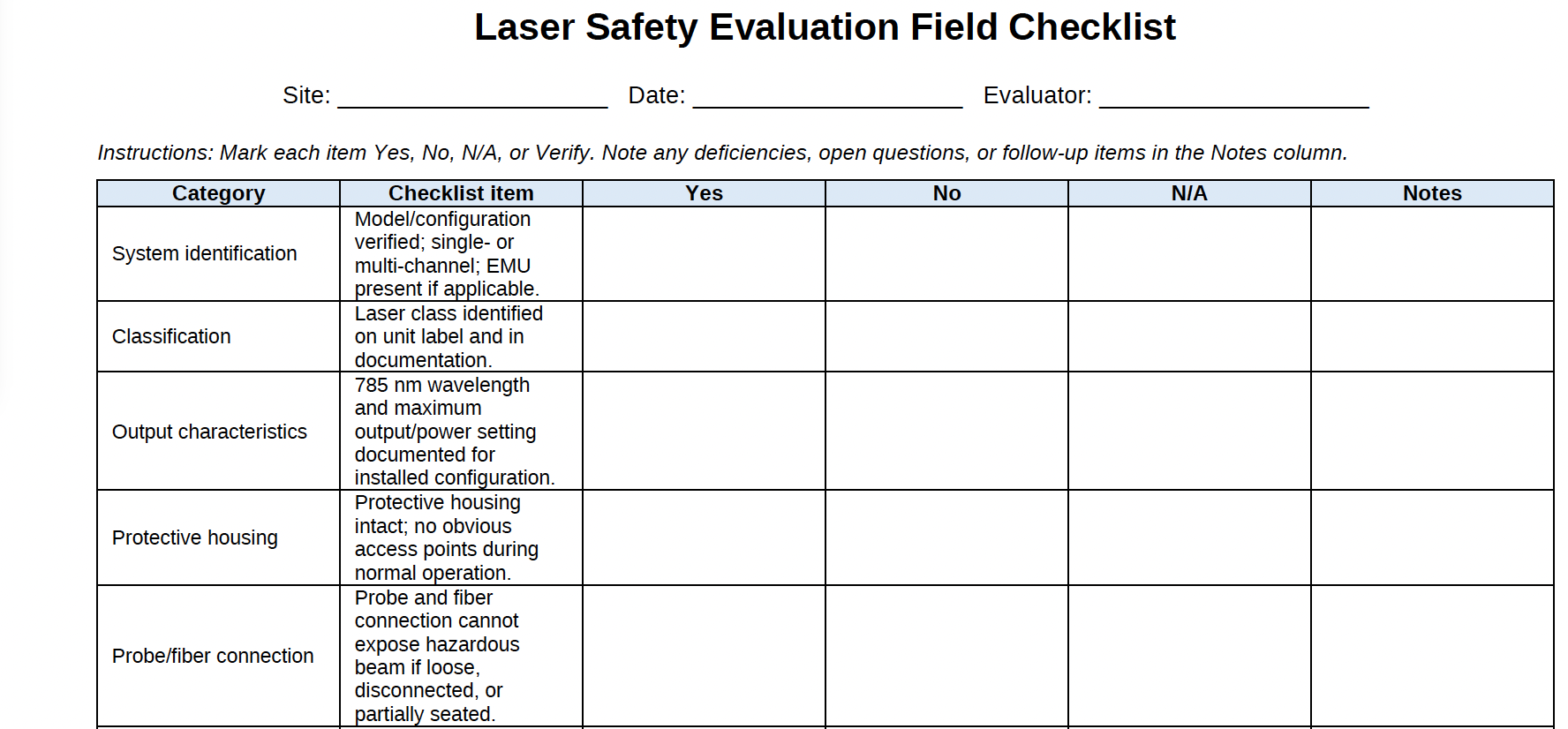
At a minimum, a proper laser hazard evaluation should address the following:
Beam Characteristics
Wavelength, power, beam diameter, divergence—these define the potential hazard. Without understanding these, everything else is guesswork leading to a latent incident.
Nominal Hazard Zone (NHZ)
NHZ is one of the most critical elements. The NHZ defines the area where exposure exceeds permissible limits. This is not based on labels, but on actual system parameters and geometry.
Reflections
Specular reflections (mirror-like) can carry nearly the full power of the beam. Diffuse reflections are often assumed to be safe, but that depends on power levels and distance. Many unintended incidents happen because reflections weren’t considered or properly evaluated.
Access Points
Access points are places where a user can actually be exposed. This includes normal operation, maintenance, alignment, and failure conditions.
Controls
Engineering controls (enclosures, interlocks), administrative controls (procedures, training), and PPE all need to be evaluated in context. This is not just whether they exist, but whether they are effective. Programs are often put together by inexperienced employees who became a Laser Safety Officer by accident under the “all other duties as assigned” clause.
Where Most Companies Get It Wrong
Common errors are usually associated with a poorly built program or when end users don’t fully understand the different hazard classes of lasers.
Over Reliance on Manufacturer Information
Manufacturer specs are important, but they don’t account for how the system is installed or used in a manufacturer facility or research environment. Manufacturers are not required or have the expertise to setup a detailed laser safety program or properly evaluate the individual use cases for end users.
Ignoring Maintenance and Alignment
A system that is fully enclosed during operation may be completely open during service. That’s often when the highest risk exists because it can completely expose the laser beam. As stated above, a Class I laser system can contain a Class IV laser that adds concerns and significant hazards when exposed.
Assuming Reflections Are Not a Concern
There are setups where reflective tools, fixtures, or surfaces were positioned directly in the beam path without anyone realizing the risk. This is extremely dangerous with infrared lasers not detected by the human eye. With a Class 3B or Class IV laser, this can lead to permanent retina damage or even blindness.
Lack of Documentation
If the hazard evaluation isn’t documented, it effectively doesn’t exist. That becomes a problem during audits, incidents, or internal reviews. If you didn’t write it down, it wasn’t completed.
Inadequate Training
People are often trained on procedures, not on the underlying hazards. That means they don’t recognize when something is unsafe. All users should be fully trained to include all hazards, classes, and safety protocols necessary
A Real-World Scenario
Consider a system used for inline process monitoring with a fiber-coupled laser probe. Under normal operation, the beam is fully contained within the process.
During maintenance, however, the probe is removed and tested externally.
No one updates the hazard evaluation.
No one reassesses the exposure conditions.
The system is still treated as “low risk” because that’s how it was originally classified.
Now you have an open beam condition with no defined hazard zone, no adjusted controls, and no change in PPE requirements.
That’s not a hypothetical scenario. It’s a common one.
The Compliance Side of This
ANSI Z136 standards are clear: a hazard evaluation is required to determine the appropriate control measures.
This isn’t just a best practice—it ties directly into broader safety goals and obligations.
Even if you’re not being inspected specifically for laser safety, general safety diligence is still an expectation. If there’s an incident and no documented hazard evaluation, that becomes a serious liability issue that may result in fines.
The Business Risk
Laser safety isn’t just about compliance, it’s about company liability, workers compensation, and other business risks that could be costly.
A laser injury, especially an eye injury, is permanent that could result in unexpected employee medical costs, or a permanent disability of an employee. Companies and safety professionals understand the cost associated with a workplace injury. That alone should be enough to justify taking laser safety and proper evaluations seriously.
In addition to a workplace injury, there are business costs associated with:
- Downtime from incident investigations
- Reputational damage with clients and regulators
- Increased scrutiny during audits
All of these are preventable with a proper evaluation.
What You Should Do Next
If you’re responsible for a facility using lasers, there is a practical approach to mitigating these concerns:
- Identify all laser systems
Not just the obvious ones—include integrated and embedded systems. - Determine if a formal hazard evaluation exists
If it’s not documented, assume it needs to be done. - Review how the system is actually used
Focus on maintenance, alignment, and non-routine tasks. Researchers may have abnormal uses and scenarios resulting in under evaluated scenarios. - Verify controls
Don’t assume interlocks or guards are functioning as intended. These should be tested regularly as instructed by the LSO. - Evaluate training
At least annually, review employee training and ensure those who are using laser systems have been training to the proper hazard. Also, ensure new employees do not operate laser systems prior to receiving approved training. - Bring in expertise if needed
Laser hazard evaluations require technical analysis and an understanding of regulations and standards. If you don’t have that capability internally, it’s worth getting support for a comprehensive safety program.
Final Thought
Laser systems are powerful tools, and in many cases, they’re critical to operations. However, they don’t come with built-in safety just because they’re enclosed or labeled. The real risk depends on how they’re use case and setup.
A proper laser hazard evaluation bridges the gap between what the system was designed to do and what actually happens on the floor or in the lab. Evaluations turn assumptions into data, and gives you a clear basis for protecting people and maintaining compliance. Simply put, without it, you’re guessing.
When it comes to laser (or any other) hazards, guessing is not a safe strategy…it’s playing Russian Roulette.
If you’re unsure whether your current laser systems have been properly evaluated, it’s worth taking a closer look for compliance and safety. Most gaps aren’t obvious until someone walks through the system with a technical lens.
A focused laser hazard evaluation can clarify your actual risk, validate your controls, and give you documentation you can stand behind during audits or inspections.
If that’s something you’re working through, I’m always open to having a conversation and helping you figure out where you stand.
0 Comments