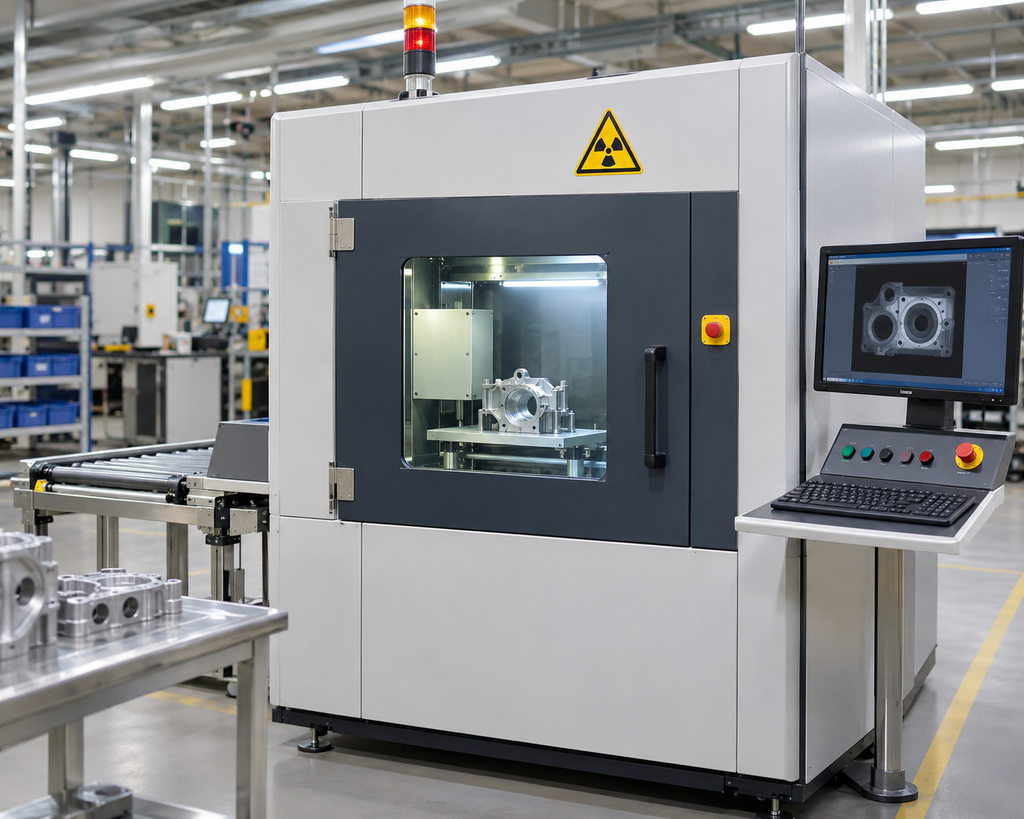
Industrial X-ray equipment used for manufacturing inspection
Industrial X-ray safety is important for businesses that use X-ray equipment in manufacturing, engineering, research, and quality control.
Proper X-ray safety practices help protect employees and prevent unnecessary radiation exposure. Proper safety procedures help protect employees, support responsible operations, and maintain a safer workplace.
In this guide, we explore essential industrial X-ray equipment safety practices, common equipment risks, radiation protection measures, employee training, and the importance of professional radiation safety support.
Understanding Industrial X-Ray Equipment
Industrial X-ray equipment uses electrically generated X-rays to examine the internal structure of materials and products.
X-ray technology helps operators detect internal defects without damaging materials.
Common industrial applications include:
- Manufacturing: Identifying cracks, voids, and structural defects in manufactured components.
- Electronics: Inspecting circuit boards, solder connections, and electronic assemblies.
- Automotive and aerospace: Examining metal components, welds, and manufactured parts.
- Food production: Detecting certain foreign materials in packaged products.
- Research and development: Studying the internal characteristics of materials and products.
Different types of industrial X-ray systems have different designs, operating requirements, and safety considerations.
Understanding the specific equipment used in your facility is the first step toward establishing appropriate radiation protection procedures.
Why Industrial X-Ray Equipment Safety Matters
X-rays are a form of ionizing radiation. Unnecessary exposure can present health risks, making radiation protection an important responsibility for businesses that operate X-ray equipment.
A properly managed equipment safety program helps organizations:
Protect Employees
Appropriate shielding, equipment safeguards, and operating procedures help minimize unnecessary radiation exposure.
Prevent Equipment-Related Incidents
Regular inspections and functional safety features help identify potential equipment problems.
Maintain Regulatory Compliance
Businesses may be subject to federal and state radiation safety requirements depending on the type of equipment and its application.
Support Reliable Operations
Proper equipment maintenance and safety procedures can help reduce unexpected interruptions.
Strengthen Workplace Safety Culture
Employees who understand radiation hazards are better prepared to recognize potential problems and follow established precautions.
U.S. Nuclear Regulatory Commission (NRC).
Essential Safety Features of Industrial X-Ray Equipment
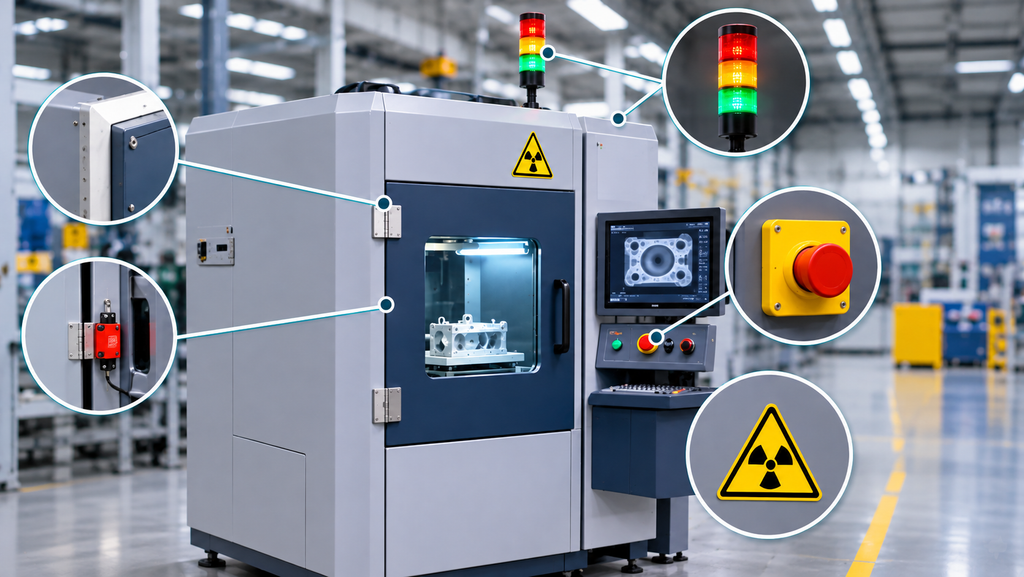
Industrial X-ray systems may include several safety features designed to control radiation exposure and prevent unauthorized access to hazardous areas.
The specific features depend on the equipment design and applicable requirements.
Radiation Shielding
Shielding is designed to reduce radiation levels outside the intended exposure area.
Depending on the equipment, shielding may include lead-lined enclosures, protective barriers, or specially designed shielded rooms.
Businesses should ensure that shielding remains in good condition and that equipment modifications do not compromise its protective function.
Safety Interlocks
Interlocks help prevent accidental X-ray exposure.
For applicable cabinet X-ray systems, federal performance standards specify safety interlock requirements.
Interlocks should never be bypassed, disabled, or modified without appropriate authorization and evaluation.
Warning Lights and Indicators
Operators should understand what each warning light or indicator means.
Emergency Controls
Employees should know where emergency controls are located.
Warning Labels and Signs
Visible warning labels and signs help communicate radiation hazards and operating precautions.
How to Inspect Industrial X-Ray Equipment
Equipment inspections are an important part of maintaining radiation safety.
Businesses should establish an inspection and maintenance schedule based on manufacturer recommendations, equipment design, operating conditions, and applicable regulations.
1. Examine the Equipment Enclosure
Check for visible damage, loose components, deteriorated protective materials, or modifications that may affect shielding.
2. Check Safety Interlocks
Check that safety interlocks work as expected.
3. Inspect Warning Indicators
Check that required warning lights, audible alarms, and other indicators function properly.
4. Review Emergency Controls
Ensure that emergency shutdown controls are accessible and maintained.
5. Review Equipment Maintenance Records
Maintain records of inspections, repairs, and maintenance activities.
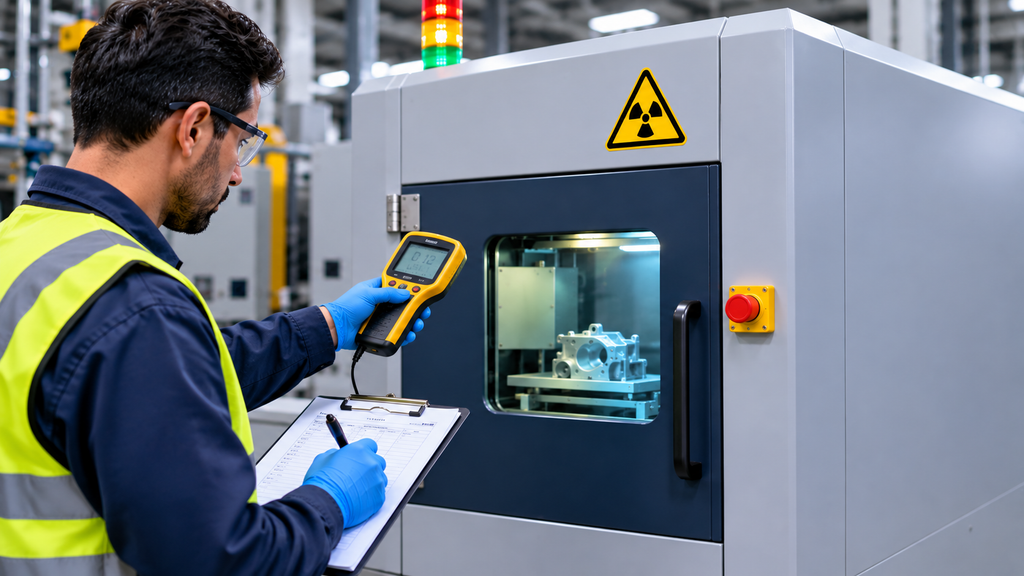
6. Arrange Appropriate Radiation Surveys
Radiation surveys may be necessary to evaluate radiation levels around equipment and verify that shielding and protective measures are performing as intended.
The Importance of Radiation Surveys
Visual inspections alone cannot establish that an X-ray system is operating within applicable radiation safety limits.
Radiation surveys provide measurements that help evaluate radiation levels in and around equipment.
Depending on the system and applicable requirements, surveys may be appropriate:
- After major repairs or modifications.
- As part of a required inspection or radiation safety program.
Survey results should be documented and reviewed by qualified personnel.
Common Industrial X-Ray Equipment Safety Mistakes
Even equipment with built-in safety features requires proper operation and oversight.
Some common mistakes include:
Ignoring Damaged Shielding
Damaged or modified shielding may reduce the effectiveness of radiation protection measures.
Bypassing Safety Interlocks
Disabling an interlock can remove an important protective feature and create an unnecessary exposure risk.
Neglecting Equipment Maintenance
Failing to follow maintenance recommendations may allow equipment problems to go unnoticed.
Operating Equipment Without Proper Training
Different systems may have different design standards, operating conditions, and regulatory requirements.
Why Employee Training Is Essential
Employees who work with or around industrial X-ray equipment should understand the potential hazards and the safety procedures relevant to their responsibilities.
Appropriate training may cover:
- Basic radiation principles and hazards.
- Equipment operating procedures.
- Radiation protection practices.
- The purpose of shielding and safety interlocks.
- Warning indicators and emergency controls.
- Procedures for reporting equipment problems.
- Applicable workplace radiation safety requirements.
Training should be appropriate to each employee’s role and responsibilities.

Understanding the Role of a Radiation Safety Officer (RSO)
A Radiation Safety Officer (RSO) may play an important role in overseeing radiation safety activities within an organization.
Depending on the applicable regulatory requirements and the organization’s radiation safety program, responsibilities may include:
- Supporting the development of radiation safety procedures.
- Reviewing radiation survey results.
- Monitoring radiation protection practices.
- Coordinating employee radiation safety training.
- Reviewing equipment safety documentation.
- Helping investigate radiation safety concerns.
- Supporting regulatory compliance activities.
RSO requirements and qualifications vary depending on the equipment, application, and jurisdiction.
Does Your Business Need Professional X-Ray Safety Support?
Businesses should understand the safety requirements associated with their equipment and establish procedures that support ongoing radiation protection.
Professional radiation safety support may help organizations with:
- Radiation safety program development.
- Radiation-producing machine registration guidance.
- Equipment radiation surveys.
- Shielding evaluations.
- Radiation Safety Officer support.
- Employee radiation safety training.
- Compliance documentation and regulatory guidance.
The appropriate services will depend on the organization’s equipment, operating activities, and applicable regulatory requirements.
Working with knowledgeable radiation safety professionals can help businesses identify potential concerns and develop more effective safety practices.
Explore Amalgamate’s Radiation Safety Training to learn how professional training can help support safer workplace practices.
Building a Strong Industrial X-Ray Safety Program
An effective industrial X-ray safety program should address equipment, employees, operating procedures, and documentation.
- Identify all radiation-producing equipment within the facility.
- Determine the applicable federal and state requirements.
- Review equipment safety features and manufacturer instructions.
- Establish appropriate inspection and maintenance procedures.
- Arrange radiation surveys when necessary.
- Provide role-appropriate employee training.
- Maintain accurate equipment, survey, and training records.
- Review and update safety procedures when operations change.
Conclusion: Make Industrial X-Ray Safety a Priority
Industrial X-ray technology provides valuable benefits across manufacturing, engineering, research, and quality control.
From shielding and safety interlocks to equipment inspections, radiation surveys, and employee training, every part of an industrial X-ray safety program contributes to protecting workers and maintaining safe operations.
Businesses should take a proactive approach to understanding their equipment, evaluating applicable requirements, and addressing potential safety concerns.
Need professional radiation safety support for your organization?
Amalgamate Radiation Safety Support helps organizations navigate radiation safety requirements through professional guidance, training, and compliance support.
Contact our team to learn how we can help support your industrial radiation safety needs and build a safer workplace.
0 Comments